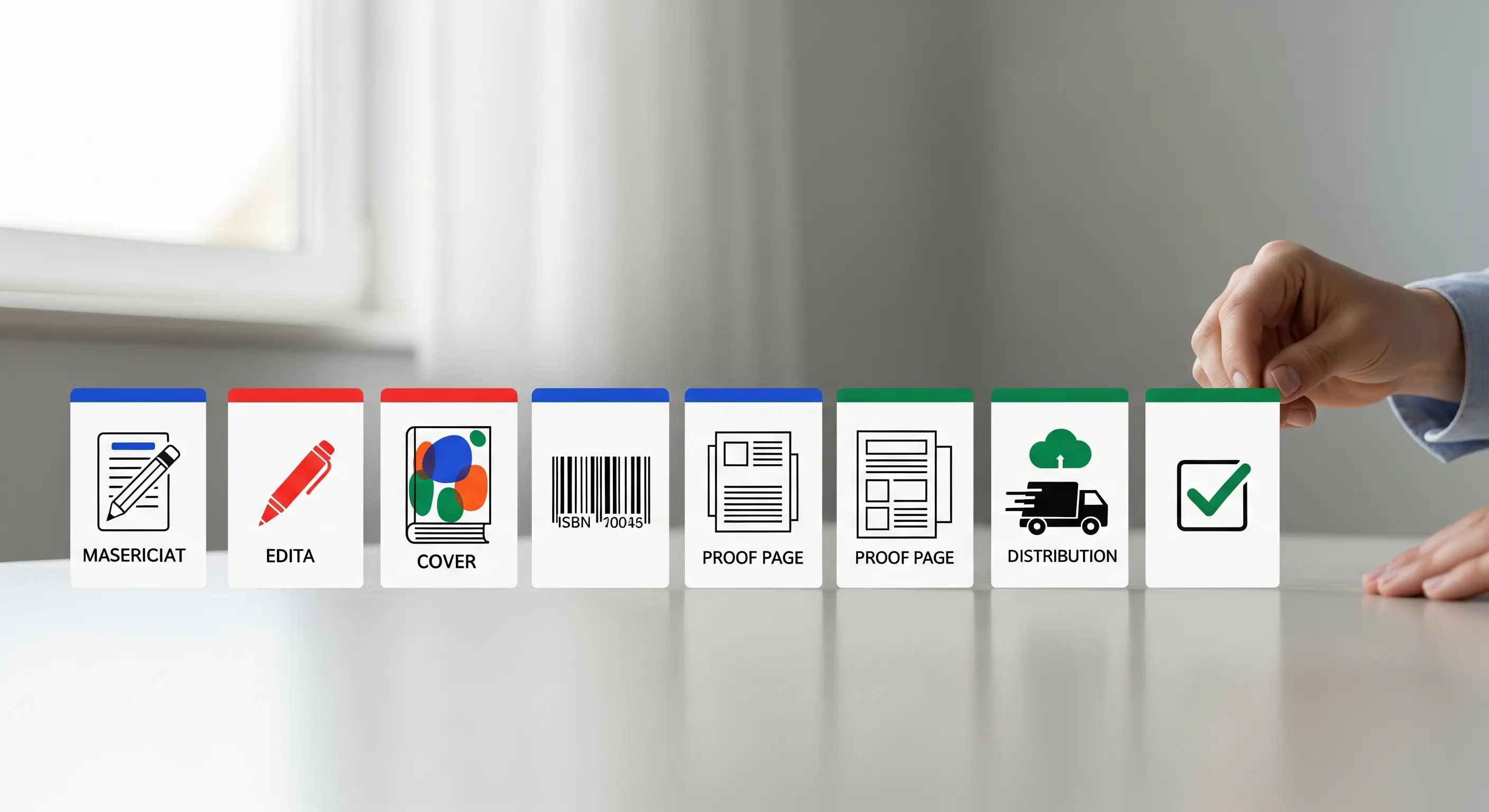
This guide walks through each area in the order most authors meet them. If you want a second pair of eyes at any step, our book publishing services include these checks as standard.
Confirm You Own What You Are Publishing
Start with the manuscript itself. You need the right to publish everything inside the covers, not only the text you typed.
Go through the book and list anything that did not come from you:
- Quotations, song lyrics, poems and long excerpts from other books. Short quotes may be fine, but lyrics and poetry are a common source of trouble, so get written permission when in doubt.
- Photographs, illustrations and charts. Keep the license or the written permission for each.
- Fonts used on the cover and inside. Make sure the license allows commercial book publication.
- Real people. Recognizable individuals in a memoir or case study may need a conversation, or a changed name.
If a ghostwriter or editor worked on the book, check that your agreement says in writing that you own the finished work and are the sole named author. Rights should transfer to you on delivery, and the paperwork should be in your files before you publish.
Finally, think about copyright registration. Your work is protected from the moment it is written, but registering with the U.S. Copyright Office gives you a public record and can matter if you ever need to enforce your rights. It is optional, and it is your decision.
One more rights point: if you plan to use the book's title as a brand, or you share a name with another author, do a quick search of bookseller sites and trademark records. A title cannot be copyrighted, but confusion with another book can cause headaches for both of you.
Get Your ISBN and Metadata Right
An ISBN identifies one edition in one format. A paperback, a hardcover and an ebook each need their own. Our guide on what an ISBN is explains the trade-offs between buying your own and accepting a free number from a platform. Whichever you choose, confirm that the ISBN is registered in your name, or in your imprint name, because that name appears as the publisher in bookseller databases.
Then check the metadata that travels with the book: title and subtitle, series name and number, author name spelling, categories, keywords, and the description. These fields decide how readers find the book, so spell them exactly as they appear on the cover. Imprint names deserve a moment of thought too. Choose one you are happy to use for every future book, and check that it does not clash with a well-known publisher. The US ISBN agency also publishes guidance on how numbers and metadata fit together.
Also decide early on the exact edition wording. If you later publish a revised edition, you will need a new ISBN, and the retailers will treat it as a separate listing. A small checklist for this stage:
- The same title and author name appear on the cover, title page, copyright page and every retailer listing.
- Each format has its own ISBN printed on its copyright page.
- The barcode, if you use one, matches the print ISBN and sits in clear space on the back cover.
Read Proofs Like a Reader and Like a Printer
Editing is done by now. Proofing is a different job: you are checking that the final files look the way you expect, not rewriting sentences.
Order a printed proof if you are publishing a paperback or hardcover, and read it on paper. Spines trip up many authors, and so do trimmed text, missing page numbers, a blank page where a chapter should begin, and covers that print darker than they looked on screen. Check that the spine text is centered and that nothing important sits too close to the edge. The retailer's own paperback cover requirements list the exact dimensions and margins you need to meet.
For ebooks, preview the file on at least two devices or apps. Click the table of contents, try the links, and flip through the images. Reflowable text behaves differently on every screen, so a quick scroll catches problems early. Test the bonus material too, such as an author's note, a reader letter or a sample chapter of the next book, because these are often forgotten. Our post on ebook and print formatting explains what usually goes wrong.
When you read the proof, change one thing about how you read. Go slowly, aloud if you can, or from the last page to the first. Your eyes know the story too well to catch a repeated word the usual way.
Check Where the Book Will Be Sold
Decide where readers will find the book and confirm that your files fit every channel. Online retailers, wholesalers that supply bookstores and libraries, and your own website each work a little differently.
Think through these questions:
- Will you use print on demand, a print run, or both? Print on demand carries no upfront inventory cost, while a print run lowers the cost per copy but ties up money in boxes.
- Do you want bookstores and libraries to be able to order the book? If so, wholesale distribution and a returns decision need to be set before launch.
- What is the list price for each format, and what do you earn from each sale after printing and retailer fees? Ask for a royalty breakdown per platform before you commit.
- Do you want the ebook on one retailer or on several?
Whatever you choose, make sure each retailer has validated your files. A file rejection is annoying but cheap if it happens a week before launch, and painful if it happens the night before. Price planning, formats and timing are all part of the work in our guide to publishing costs too.
A typical full publishing timeline runs about 4 to 8 weeks from final manuscript to a live book, so leave room for approvals and corrections. Rushing the last two weeks is how mistakes get through. If you do need a firm date, say so at the start so the schedule can be built around it.
Final Look at the Cover and Description
Look at your cover the way a reader will, shrunk to the size of a stamp on a phone screen. Can you read the title and recognize the genre? Our guide to book cover design goes through the thumbnail test in detail.
Then read the back cover copy and online description once more. Check that the first two lines tell the reader what kind of book this is and why they should care, because retailers often show only those lines before a "read more" link. Add a short author bio, and double-check that every link and website address works. If you are still working on your bio and site, see our notes on building your author brand. Ask someone who has never heard of the book to tell you, in one sentence, what it is about. If they struggle, your description needs another pass. Read the keywords and categories one last time, because these choices decide which shelves the book appears on.
A Short Checklist of What to Check Before You Publish a Book
- Permissions and licenses filed for every quote, image and font.
- Written confirmation that you own the manuscript and are the credited author.
- An ISBN for every format, with matching copyright pages.
- Metadata checked against the cover, title page and retailer listings.
- Printed proof reviewed and ebook previewed on two devices.
- Files validated with each retailer or distributor.
- List prices and royalty expectations confirmed in writing.
- Cover tested at thumbnail size, description and bio finalized.
- Launch date and review plan agreed, so readers know when to look for the book.
- A backup copy of every final file saved in at least two places.
FAQs
Do I need to register my copyright before I publish?
No, copyright protection exists once the work is created, and registration is optional. Many authors register because it creates a public record, but you can decide with a lawyer's advice.
How many proof copies should I order?
One is the minimum. Many authors order one or two, and send a copy to a trusted reader who has not seen the book before.
Can I change my book after it goes live?
Yes, you can upload corrected files, but updates can take days to reach every retailer and printed copies already sold stay as they were. That is why checking before you publish matters.
Knowing what to check before you publish a book makes the launch much calmer. Get a free consultation and we will review your plan with you, or submit your manuscript to start.