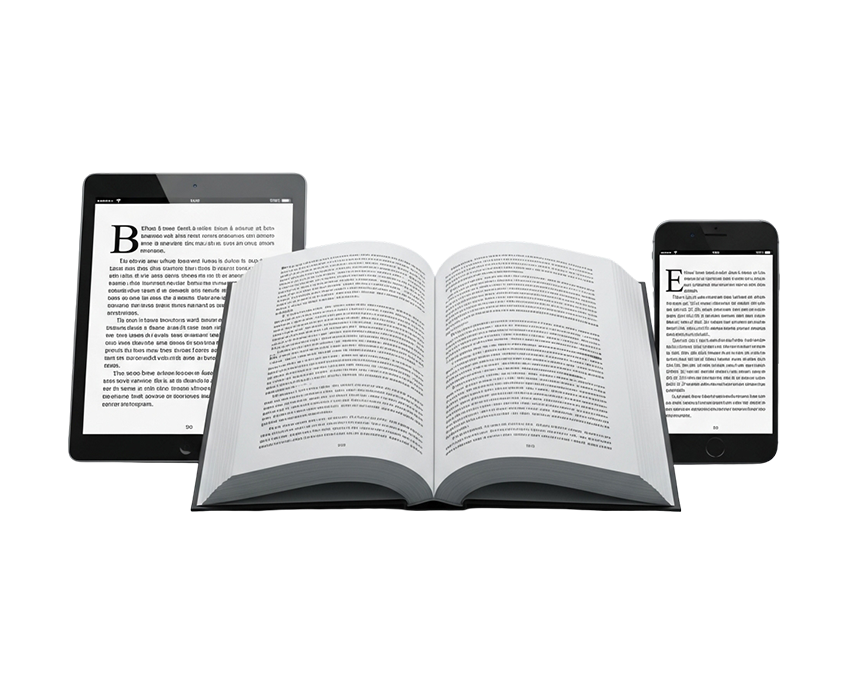
Book formatting, also called interior design or typesetting, is the work of turning a manuscript file into a finished book. It covers the page size, margins, fonts, spacing, chapter openings, page numbers and every small decision that makes text comfortable to read for hours.
It is not the same as editing. Editing improves your words, your structure and your grammar. Formatting takes those final words and arranges them on the page. It is also different from cover design, which creates the outside of the book, while formatting creates everything inside it.
Fonts, spacing and structure also affect how long a reader stays with your book. Tight, even pages feel effortless, which is exactly what you want from a story or a how-to guide.
Think of a Word document and a published novel. The words may be identical, but one looks like a draft and the other looks like a book. Readers rarely notice good typesetting, and that is the point. They notice bad typesetting immediately, through cramped lines, odd gaps and chapters that start in random places.
If you are publishing through KDP, IngramSpark or another platform, a clean interior also protects you from rejected uploads and costly proof copies. Doing it right once is cheaper than fixing it three times.